
Posted by Jake Heying on May 29th 2026
Clean vs. Replace a Diesel Air Filter: When to Do Each
Clean a diesel air filter when it is just packed with dry dust. Replace it when the media or the seal is damaged. That is the whole call. A primary filter that is dirty but sound, with no holes, no soft spots, and a seal that still grips, goes right back to work after a proper cleaning. One that is torn, oil-soaked, or still choking off air after you have cleaned it is finished, and no amount of air will bring it back. In heavy dust a filter can plug in a single shift, so the money is in cleaning often and buying new only when a filter actually fails, not every time it comes out looking ugly.
Key takeaways
- A filter that looks filthy is not automatically used up. Restriction tells you when to service it, not the calendar and not your eyes.
- Clean a sound filter. Replace one with torn media, a bad seal, or oil and soot worked into the pleats.
- The light test takes a minute and settles most clean-or-replace calls. Inspect before every reinstall.
- What wrecks filters is the method, not cleaning. 125 to 150 psi through a single nozzle tears the media. Controlled cleaning does not.
- In heavy dust, clean daily. A clogged filter on a big machine can burn 60 extra gallons in a day, and a filter is a lot cheaper than a turbo.
Is a dirty air filter actually a problem?
Not by itself. A loaded filter is doing its job. As dust cakes onto the media the pores get smaller and the filter actually catches fine particles better, right up until it starts choking off airflow.
So the dirt is not the enemy. Two other things are.
One is restriction. Pack a filter tight enough that the engine cannot pull the air it needs, and you lose power, burn extra fuel, and eventually trip the machine into a derate that limps you back to the yard.
The other is a filter that gives up and lets dust through, and that is the one that empties your wallet. Jobsite dust carries silica, and silica in the intake behaves like a lapping compound, grinding at the cylinders once it mixes into the oil. A filter is a lot cheaper than a turbo, and a pinhole or a bad seal is how you end up buying the turbo. For the longer version of how the element traps that dust to begin with, see how air filters work in heavy equipment diesel engines.
So on any dirty filter, the only thing that matters is whether it is still sealing and still flowing. If it is, it cleans up and goes back in. If it is damaged, no amount of cleaning saves it.
When should you clean instead of replace?
Clean it when the element is loaded with dry dust but still in good shape. For anyone working in dirt, that is most of the time.
You are good to clean when:
- The pleats are full of dry dust, but the media is not torn, soft, or worn thin.
- The radial seal still feels firm and springs back, with no cracks or set-in crush marks.
- There is no oil film, no fuel smell, and no caked sooty mud in the media.
- The filter has not already been cleaned so many times that it is near the end of its life.
A combine in a dry bean field, a dozer on a gravel haul road, a loader working an aggregate pit. A filter on any of those can pack solid with dry dust by the end of a shift, long before the media itself wears out, and dry dust is exactly what a controlled shot of air lifts back out. Keeping a good filter clean is about the cheapest insurance there is on the engine behind it, which is the case we make in extending diesel engine life by cleaning air filters.
When do you have to replace it?
Cleaning has a hard stop, and forcing a dead filter back into the housing is how dust reaches the engine. Replace the primary when you find any of these:
- Torn or thin media. Any hole, tear, or soft spot in the pleats. A pinhole you cannot even see will feed grit straight to the turbo.
- A bad seal. A radial seal that is cracked, hardened, or crushed so it will not seat tight means the filter is done, no matter how clean the media looks. A filter that does not seal is not filtering.
- Oil or soot saturation. Air lifts out dry dust. It does nothing for oil, fuel, or sooty mud that has soaked in. Once that is in the media, the filter is spent.
- Restriction that will not come down. Clean it, and if the gauge stays high, the media is plugged past the point air can clear. Replace it.
- Plain old age. Every element has a ceiling. One that has been cleaned many times, or simply run too long, gets retired even if it still looks fine.
Here is the one people skip: the safety element. Most off-road machines run a two-stage setup with an inner safety filter tucked behind the primary. You do not clean that one. Replace it about once for every three primary changes, and otherwise leave it sealed so you are not dumping dust into the engine every time you pull the outer filter.
How do you tell a good filter from a junk one?
You do not have to guess. A few minutes with the filter in your hands settles it.
Run the light test. Drop a droplight or a flashlight inside the filter, get into a dark corner of the shop, and look at the media from the outside. The light should glow through soft and even. Bright pinpoints or streaks mean thin spots or holes, and that one gets replaced. In our testing we cleaned a single filter 29 times over eight days, dropped a light inside, and the media was still perfect. That is what sound looks like.
Check the seal with your fingers. Run a finger around the radial seal. It should feel firm and rubbery and snap back. If it stays dented, feels brittle, or shows cracks, replace it.
Go by the gauge, not by the color. Restriction, or pressure drop, is the real signal, and you cannot read it off how dirty the filter looks. Use the restriction indicator on the intake and service the filter when it says so. Caterpillar gives the same advice for its own filters: watch the service indicator and change the filter only once it has actually reached its limit, which keeps you from pitching filters with good life left.
One more, if you run oil sampling: have the lab check for silica. A silica spike is often the first solid sign a filter or a seal is leaking, well before you would ever spot the damage by eye.
Doesn't cleaning filters damage them?
I get this one all the time. The filter guy told you never to clean your filters, so you figure cleaning is a shortcut that bites you later. Here is why that advice exists, and why it is only half the story.
The manufacturers are not wrong that most people wreck filters cleaning them. The trouble is how they do it. The average guy walks up with the shop compressor and hits the filter with 125 to 150 psi straight out of a single nozzle, point-blank. That much pressure in one spot tears the media, and once it is torn it feeds dirt right into the engine and the turbo. Banging it on the bumper and dunking it in a wash bucket do their own damage, since the water left behind packs the dirt tighter and breaks the media down over time. Cleaned that way, sure, a filter is worse than no filter.
That is a method problem, not a cleaning problem. And I will say it plainly: the company selling you replacement filters has a reason to tell you to buy a new one every time.
Control the pressure and you change the whole story. Mike Peterson, a mechanic, says the other cleaners he tried "either did a horrible job or put holes in my filters." A tool that caps the air at any one point and works the dust out from the inside, instead of driving it in, does not put holes in anything. We proved it the hard way: we deliberately clogged filters and cleaned them 60 times over without tearing one. The rule that keeps it safe is simple, and it never changes. Inspect every filter before it goes back in. Let the light test make the call, not wishful thinking.
What does each one actually cost?
A clogged filter costs you every hour the machine runs, and you will not see it on a gauge. Run a big combine with the filter 50 to 75 percent plugged and it can eat an extra 3 to 5 gallons an hour. Over a 12-hour day that is around 60 gallons, about $240 at $4 diesel, gone. The bigger the machine, the bigger that number.
That is not just our math. In a 90-day trial, a third party ran two identical John Deere 7750 tractors in the same field, the same 12-hour day, and the one with the dirty filter burned 58 gallons more than the one cleaned that morning. On a big articulated rock truck the same trial put the savings over $10,000 a year. The write-ups are on our field trial results, and there is more on the fuel side in how heavy equipment operators can increase fuel efficiency.
Now the other side of the ledger. A new primary filter runs about $30 to $150, more for the big or premium ones, and most machines need the inner safety element too. In heavy dust you could be buying one every shift or two. Allan Miller, a shop owner, says cleaning instead of replacing has saved his clients money on filters, and they are burning less fuel besides. Clean the filter and you keep both the fuel and the filter.
Results vary. Filter life and fuel savings depend on the filter, the cleaning method, the equipment, and how hard and dusty the work is. The numbers here come from specific field-trial conditions and are not a guarantee.
How often should you clean, and how long can a filter last?
Two different questions, and operators tend to guess wrong on both.
Lifespan comes down to damage, not how many times you have cleaned it. A filter does not wear out from cleaning. It wears out from holes, oil, and age. Clean it right and inspect it every time, and you can get up to twenty times the life out of the same element before it ever needs replacing.
Frequency comes down to the dust. In that same trial, both test filters were already mostly plugged after one 12-hour day in heavy dust. So in heavy dust, clean daily. In lighter conditions, let the restriction indicator set the pace. Either way you are working off condition, not off a calendar you made up. And if your crew is in silica-heavy dust day after day, there is a health side worth reading, which we get into in why construction and road crews should minimize dust and silica exposure.
Clean or replace: the 30-second version
Filter in hand, run it down this list:
- Light shows through holes or thin spots? Replace.
- Seal cracked, hard, or crushed? Replace.
- Soaked with oil, fuel, or sooty mud? Replace.
- Restriction still high after a good cleaning? Replace.
- Just full of dry dust, media and seal good? Clean it and run it.
- Inner safety element due per your manual? Replace it on schedule. Do not clean it.
Where Air Filter Blaster fits
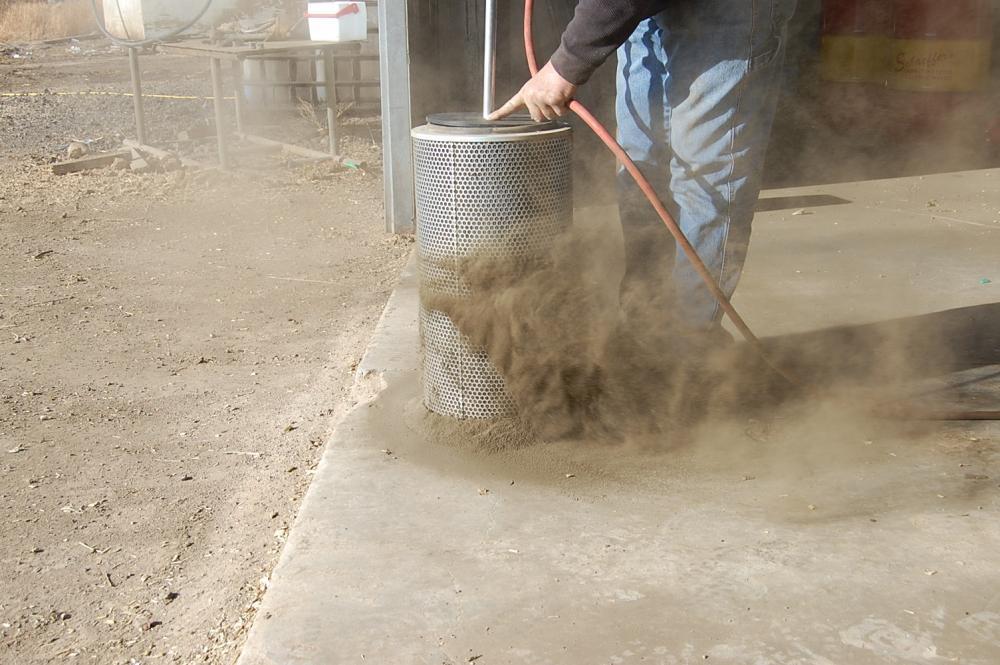
Cleaning the right way is what makes the clean side of this decision pay, and that is the whole reason we built the Air Filter Blaster the way we did. It runs on your shop's compressed air. No water, no chemicals. The air feeds into a centrifugal induction chamber, spins, and vibrates the dust out of the filter from the inside out, so the dirt leaves the way it came in instead of getting driven deeper. It never lets a hard jet hit the media in one spot, which is the exact thing that tears filters. That is how the same element takes cleaning after cleaning and still passes a light check.
The Portable Unit handles full-size radial seal filters in the shop or out in the field, and the Filter Blaster MINI covers the smaller equipment filters. Both run off a standard compressor, so there is no machine to buy and nothing proprietary to reorder. To match one to your equipment, the full Air Filter Blaster lineup lays out the options.
FAQ
Is it better to clean or replace a diesel air filter?
Clean it if it is only dirty and the media and seal are sound. Replace it if you find damage, a bad seal, or oil and soot in the media, or if restriction stays high after cleaning. Cleaning a good filter reuses an element that still has most of its life left, which is cheaper than buying new every time.
How many times can you clean an air filter before replacing it?
There is no fixed number. It depends on the element and how it is cleaned. We have clogged and cleaned filters 60 times over in testing without a tear, and you can expect up to twenty times the life out of one as long as you inspect it before every reinstall. You retire a filter when it is damaged, not after a set count of cleanings.
Can you clean a diesel air filter with water?
It is a bad idea. Water leaves moisture in the media that packs dirt tighter and makes the engine work harder, and it breaks down the media and the seal over time. A controlled shot of dry compressed air pulls out dust without those problems.
How do I know if my air filter is damaged?
Put a light inside it in a dark shop and look from the outside. Soft, even light means the media is good. Bright pinpoints or streaks mean holes or thin spots, so replace it. Also check that the radial seal is firm and uncracked, and watch your oil samples for a silica spike, which can signal a leak.
How often should I clean my air filter in dusty conditions?
In heavy dust, plan on daily. Field testing showed filters can be mostly plugged after one hard day in dust. In lighter conditions, let the restriction indicator tell you when to service it rather than cleaning on a schedule.
Bottom line: stop buying filters you could be reusing. Look over the Air Filter Blaster lineup, or call us at (855) 341-4677 and we will help you match a unit to your equipment.